- Negotiation Alchemist
- Posts
- Negotiating for others? It'll go wrong.
Negotiating for others? It'll go wrong.
The moral tension no negotiation book talks about, but every professional feels

Scott Harrison
May 22, 2025
What happens when you’re told to do something you don’t believe in?
You agree a price with a supplier.
It’s fair. Professional. You shake hands.
Then your manager says:
“Actually, go back and ask for a discount.”
Now you’re stuck.
This isn’t just about money anymore.
It’s pressure, integrity, loyalty, and trust, all colliding in real time.
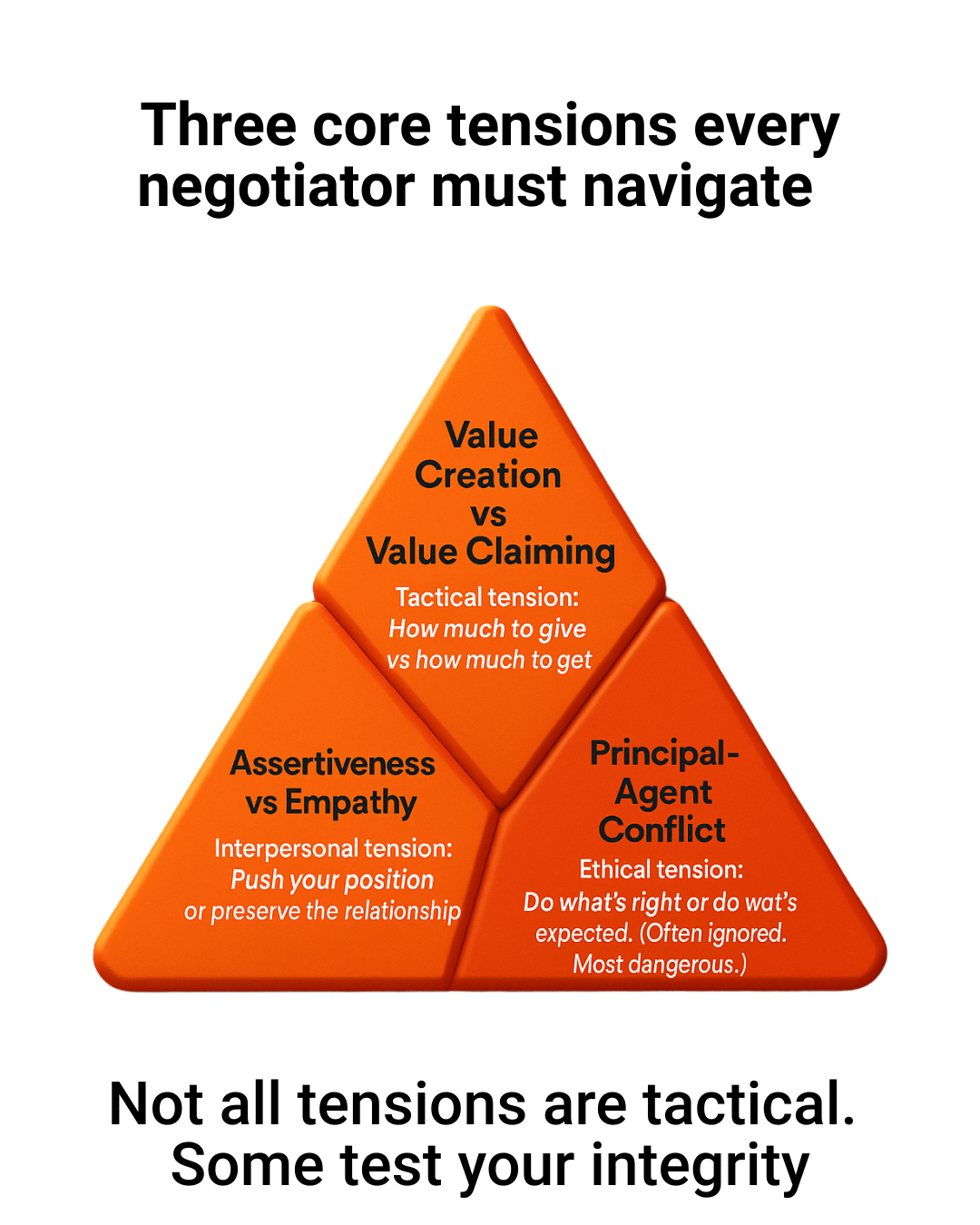
Welcome to the principal-agent problem.
In negotiation, we focus a lot on:
Creating value vs claiming value
Assertiveness vs empathy
But there’s a third tension—less talked about, more dangerous:
What happens when you’re negotiating on behalf of someone else?
You’re the one doing the work.
And your name is still on the line
But someone else is calling the shots.
Now things will break down
This tension shows up fast and quietly:
You’re asked to reverse a promise because “it’s just business”
You’re forced to choose between your values and your role
You’re given vague authority, but judged on hard results
And when things go wrong, three parties lose:
The principal, whose reputation is now at risk
The agent (you), who feels morally compromised
The counterpart, who no longer trusts either of you
You must think clearly when pressure clouds everything!
When logic gets blurry and pressure mounts, these 4 ethical checks bring clarity:
The Publicity Test
Would I be okay with my actions printed, accurately, in tomorrow’s news?The Universality Test
Would I want everyone in my position to act this way?The Trusted Friend Test
Would I proudly tell my best friend, partner, or child what I did?The Legacy Check
Would I want this to be part of how I’m remembered?
Ask them before the conversation, not when it’s already too late.

So, before you even get to the table
If you’re the principal (leader, founder, client):
Be clear on what’s negotiable and what’s not
Choose agents whose style reflects your values
Don’t reward tactics that damage long-term trust
If you’re the agent (negotiator):
Get clarity: What authority do I have? What’s off limits?
Flag conflicts early, before they become traps
Don’t hide behind “I was just doing my job”
My final words
You're not a puppet.
And “I was told to” is not a legacy you want.
Negotiating for others comes with power, but also responsibility.
Your integrity doesn’t get outsourced just because your role did.
Get clear. Get aligned.
And never trade long-term trust for a short-term win.
See you in the next issue.
Until then, negotiate like it matters.
Your friendly negotiation alchemist
Scott